Outdoor Patio in San Diego: What Permits Do You Actually Need?
A practical guide to permit requirements for covered patios, outdoor kitchens, decks, and outdoor living space additions in San Diego County

An outdoor patio remodel is one of the most popular home improvement projects in San Diego. The weather makes outdoor living genuinely usable year-round, and a well-designed outdoor space adds livable square footage without the cost of a full addition. But before the concrete is poured or the first post is set, there's a question most homeowners do not think to ask: does this project require a building permit?
For most outdoor patio remodels in San Diego, the answer is yes. The scope of the permit requirement depends on exactly what the project involves, but covered structures, outdoor kitchens, raised decks, and electrical or gas connections all trigger the permit process. Understanding what requires a permit, and what the process looks like, helps you plan the project correctly from the start rather than dealing with complications after the work is done.
What Parts of a Patio Remodel Require a Permit?
Not every outdoor upgrade requires a permit. A simple concrete patio slab with no structure above it and no utility connections is typically not permit-required. Once the project moves beyond that, the permit picture changes quickly.
| Project Element | Permit Required? | Notes |
|---|---|---|
| Concrete patio slab (ground level, no utilities) | Usually no | Flatwork under a certain depth typically does not trigger a permit |
| Attached patio cover (solid roof) | Yes | Any structure attached to the house is always permit-required |
| Attached pergola or shade structure | Usually yes | Attachment to the main structure triggers review in most jurisdictions |
| Freestanding pergola or gazebo (no utilities) | Check jurisdiction | Small open freestanding structures sometimes exempt; threshold varies |
| Raised deck (30 inches or more above grade) | Yes | Height above grade triggers structural review |
| Low-profile ground-level deck | Often no | Depends on height above grade and jurisdiction |
| Outdoor kitchen (gas or electrical) | Yes | Any utility connection requires permits from building and fire divisions |
| Exterior lighting, fans, or outlets | Yes | Electrical connections require an electrical permit |
| Fire pit with gas line | Yes | Gas line connections always require a permit |
| Landscaping and irrigation | Usually no | Hardscape and plant material generally not permit-required |
The City of San Diego, Chula Vista, Escondido, El Cajon, National City, and unincorporated San Diego County each set their own thresholds. If your remodel is near the borderline between permit-required and exempt, the safest step is to confirm with the local building department before starting work.
What Triggers the Permit Requirement?
Four conditions reliably push an outdoor patio remodel into permit-required territory:
Attachment to the main structure. A patio cover, awning, or pergola attached directly to the house connects to the building's structural system. That connection requires a permit regardless of the cover's size or material. Even a lightweight shade structure attached to an exterior wall will need plans and a permit.
Size. Detached freestanding structures over 120 square feet generally require a permit even without utilities, per the California Residential Code's accessory-structure exemption. Some jurisdictions apply additional zoning limits below that threshold, so check your specific jurisdiction for the number that applies.
Utility connections. Adding electrical circuits for lighting, fans, or outlets, or running a gas line for an outdoor kitchen or heater, always requires a permit. These trigger building, electrical, and mechanical inspections.
Height above grade. Decks raised 30 inches or more above the adjacent ground surface require a structural review. The height is measured at any point within 36 inches horizontally of the deck edge, so a deck that sits low along most of its length but crosses 30 inches at one corner still triggers the requirement. The concern is the framing, ledger connections, and fall protection, not the decking surface itself.
What Drawings Does a Patio Remodel Permit Require?
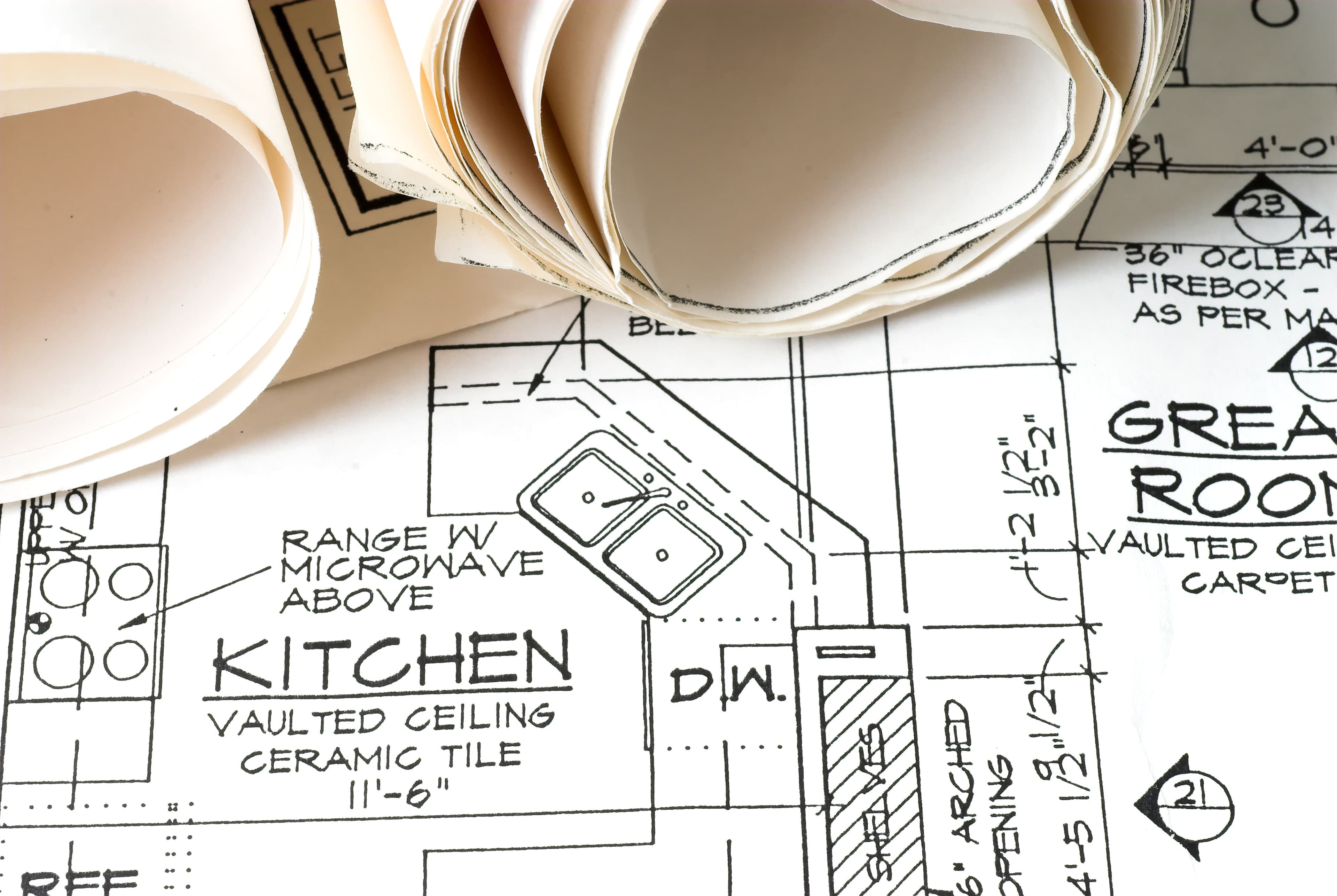
A permit application for an outdoor remodel is not just a form. It requires a drawing set that a plan checker can review against the California Building Code and any local amendments. The drawing set does not have to be as extensive as an ADU or full home addition, but it does need to be accurate and complete.
Site plan. A scaled overhead view of the entire property showing existing structures, the proposed patio or cover footprint, property boundaries, and setback dimensions from all property lines. Setbacks are frequently the first thing a plan checker evaluates. Missing or incorrect setback callouts are the most common source of plan check corrections on outdoor structure applications.
Framing plan. For any covered structure with a solid or partially solid roof, the drawing set needs to show post locations, beam sizes, roof framing direction, and how the structure connects to the house or to its own footings. Open-lattice pergolas may require less detail, depending on the span and jurisdiction.
Elevation drawings. Exterior views showing the finished height of the structure, roofline, and how the new construction relates to the main house. These confirm that the project meets local height limits.
Electrical plan. Required if the project includes any wiring: lighting circuits, outlet locations, panel connections, and circuit labeling.
Structural notes. Connection details for post-to-beam and beam-to-ledger connections, especially if the cover attaches to the house. Inspectors verify that these connections meet lateral load requirements.
The drawing requirements vary across San Diego's jurisdictions. A set prepared for the City of San Diego's Development Services Department may not meet the submittal standards for Chula Vista or unincorporated county areas. Working with someone who knows each department's specific requirements reduces the chance of a correction that sends you back to the drawing board.
What Are the Most Common Remodel Permit Mistakes?
Most plan check corrections and permit delays on outdoor remodel projects come from the same recurring issues:
Incorrect or missing setback dimensions. Covered patio structures typically need to maintain setbacks from all property lines, and those setbacks are explicitly called out on the site plan. A site plan that approximates rather than dimensions setbacks will come back with a correction.
Building before the permit is issued. Outdoor structures are highly visible and frequently spotted during neighbor complaints or routine inspections. A structure built without a permit creates an as-built problem that is more expensive and uncertain to resolve than the original permit process would have been.
Submitting to the wrong building department. La Jolla projects go through the City of San Diego's Development Services Department, not a separate La Jolla permit office. Properties in unincorporated areas that are not inside any city boundary go through San Diego County's Planning and Development Services. Submitting to the wrong office means starting over.
Missing utility permits. Homeowners sometimes obtain the building permit for the structural work but forget that a separate electrical or mechanical permit is required for the gas or wiring. Inspections cannot be completed without both.
What If Part of the Remodel Was Done Without a Permit?
Unpermitted work surfaces during real estate transactions, refinancing appraisals, and insurance claims. It also becomes visible during city inspections triggered by other work on the property. When unpermitted outdoor construction is discovered, the typical path forward is an as-built permit.
An as-built permit involves preparing drawings of the existing structure as built, submitting them to the building department, and having an inspector evaluate whether the work meets current code. If it does, the permit is issued. If the existing construction does not comply with code, corrections may be required before the permit can close, and in some cases that means opening or removing parts of the structure to expose framing for inspection.
The as-built process is not impossible, but it is more expensive and more time-consuming than getting the drawings done correctly before construction. Most outdoor remodels are better served by starting with the permit in hand.
Frequently Asked Questions
Do I need a permit for a patio cover in San Diego if I'm only replacing an existing one?
Replacing an existing permitted cover in kind (same size, same structure, same attachment points) may qualify for a minor alteration or repair permit rather than a full structural permit. If the replacement changes the size, adds a solid roof where there was none, or involves any structural modification, a full permit is typically required. Confirm with your city's building department before starting the replacement.
What about a patio remodel that's just resurfacing or landscaping?
Resurfacing an existing concrete patio, replacing pavers, or adding landscaping and irrigation does not typically require a building permit. The permit requirement is triggered by structural work, utility connections, or new covered structures, not cosmetic surface changes.
How long does a patio remodel permit take to get approved in San Diego?
Permit timelines depend on the specific building department, current review volumes, and whether the drawing set is complete at submittal. An accurate, complete drawing set moves through plan check faster than a set that generates corrections. A free consultation with BluPlan Studio is the most reliable way to get a realistic picture of the timeline for your specific project and jurisdiction.
Do I need an architect for patio permit drawings in San Diego?
Not necessarily. California Business and Professions Code Section 5537 allows non-architects to prepare plans for single-family wood-frame structures in many cases. Most patio covers and outdoor structures fall within that scope. Projects with complex structural systems or in areas subject to architectural design review may benefit from licensed architect involvement, but a qualified residential designer can handle the drawing set for most standard patio remodel permits.
Does my HOA approval replace the city building permit?
No. HOA approval and city building permit approval are entirely separate processes. An HOA can approve a design that the city requires changes to, or vice versa. You need both. Some HOAs require the city permit to be issued before they grant their own final approval; others process them in parallel. Check your CC&Rs for the specific sequence your HOA follows.
Planning a Patio Remodel? Start With the Permit Process.
Outdoor patio remodels are one of the most satisfying improvements you can make to a San Diego home. Getting the permit process handled correctly from the start keeps the project on schedule and protects the value of the work you're putting into the property.
BluPlan Studio prepares permit drawings and manages the full submittal process for patio covers, outdoor kitchens, raised decks, and outdoor living space additions across San Diego, La Jolla, Chula Vista, Escondido, National City, and El Cajon. A free consultation is the right starting point to understand what your specific project will need.
See how BluPlan handles permit drawings and processing or explore our home remodel services to learn more about what we design and build permits for.
Ready to start your project?
Schedule a free consultation with our team to discuss your project. We'll tell you what's needed and give you a clear quote, no obligation.
See This Design in Action
Explore our portfolio projects that bring these concepts to life.