Building Permit Drawings in San Diego: What's Required for an ADU or Addition
When most homeowners hear the word "permit," they picture a form filed at a government office. What they don't always realize is that before any form gets submitted, there's a technical deliverable that has to be prepared first: the building permit drawings. These are the actual documents the city or county reviews to determine whether your project can be approved. Without a complete, accurate drawing set, a permit application does not move forward. This post covers what building permit drawings include, why San Diego has requirements that go beyond the basics, what causes drawing sets to get rejected, and how the scope of the drawing set shifts depending on whether you're building an ADU, a home addition, or converting a garage.
What Are Permit Drawings?
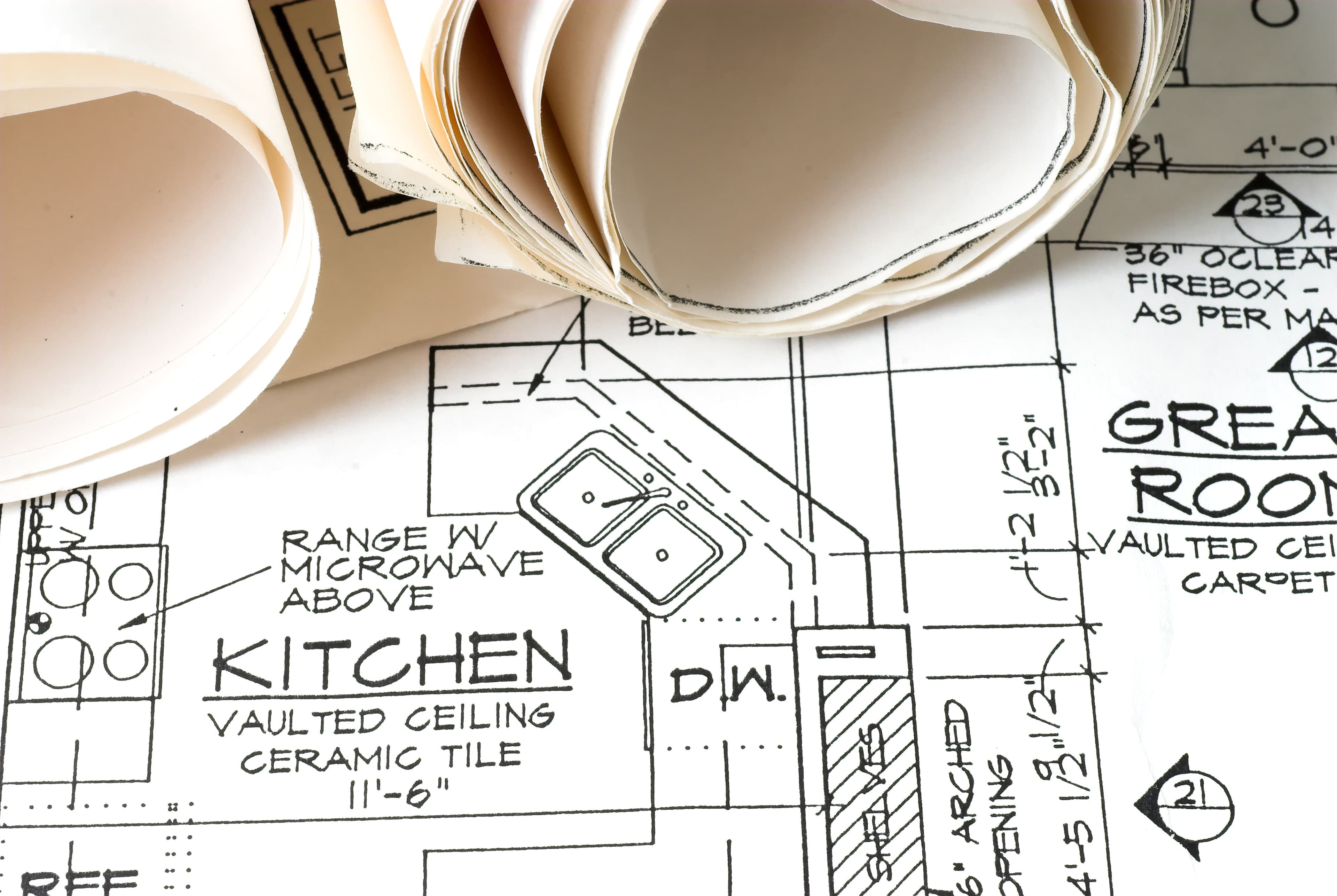
Permit drawings are a formal, scaled set of construction documents prepared before a permit application is submitted. They are not sketches, concept renderings, or rough layouts. They are technical documents drawn to scale, with specific callouts, notes, and compliance information that a plan checker can evaluate against the applicable building code. In San Diego, permit drawings are typically prepared by a licensed architect, structural engineer, or experienced residential designer. The City of San Diego's Development Services Department (DSD) and San Diego County's Planning and Development Services (PDS) both have specific formatting requirements and drawing content standards. A drawing set that doesn't meet those standards will come back with corrections before it gets reviewed on the merits.
What's Included in a Permit Drawing Set
The exact sheets required depend on your project type, but most residential projects in San Diego require some version of the following:
| Sheet | What It Shows | Required For |
|---|---|---|
| Title Sheet | Project scope, code references, designer info | All projects |
| Site Plan | Property boundaries, setbacks, proposed footprint | All projects |
| Floor Plan | Interior layout, dimensions, room labels | All projects |
| Elevation Drawings | Exterior heights, rooflines, materials | All projects |
| Structural Drawings | Framing, foundation, engineer details | ADUs, additions, most conversions |
| Title 24 Report | Energy code compliance | All projects |
| CalGreen Checklist | Sustainability requirements | All projects |
| Soils Report | Soil conditions for foundation design | ADUs (site-dependent) |
Title Sheet
The cover page for the drawing set. It includes the project address, a written scope of work, applicable code references (California Building Code, energy code, CalGreen), and the names of the designers and engineers involved. Plan checkers use it to understand the full scope before opening the other sheets.
Site Plan
A scaled overhead view of the entire property. It shows property boundaries, setbacks from all property lines, the footprint of the existing home, any existing accessory structures, and the proposed location of the new construction. Setback dimensions must be explicitly called out. Missing or incorrect setback callouts are one of the most common reasons a drawing set gets flagged during plan check.
Floor Plan
A scaled overhead view of the interior layout of the new or altered structure. It shows room dimensions, door and window locations, and labels each space (bedroom, bathroom, kitchen, etc.). For ADUs, floor plans also need to show egress windows and required smoke and CO detector locations.
Elevation Drawings
Exterior views of each side of the structure showing finished heights, rooflines, and exterior materials. They demonstrate that the project meets height limits and, for properties in architectural review zones, that the design is consistent with local standards.
Structural Drawings
Framing plans, foundation details, and structural notes prepared or reviewed by a licensed structural engineer. These show how the building is supported: beam sizes, post locations, hold-downs, and foundation type. For detached ADUs, a complete structural package is standard. For smaller conversions, a simpler set may be acceptable depending on the scope.
Title 24 Energy Compliance Documentation
California's Title 24 energy code applies to all new residential construction and most additions. The permit drawing set must include a compliance report showing that the project meets energy performance standards for insulation, glazing, mechanical equipment, and lighting. This is generated using state-approved compliance software and submitted with the plans.
Why San Diego Has Specific Requirements
San Diego's requirements reflect both state law and local conditions. California mandates Title 24 energy compliance and CalGreen sustainability requirements on all newly constructed residential buildings, including detached ADUs. Note that ADUs created within existing space (such as garage conversions) are treated differently for certain energy provisions, for example, newly constructed detached ADUs trigger the state solar requirement, while ADUs built within existing space or as additions to existing homes do not. Both also apply to alterations and additions that increase a home's conditioned floor area, which includes converting an unconditioned garage to livable space. These are statewide minimums and apply regardless of which city or unincorporated area you're in. On top of that, the DSD and PDS each have their own submittal checklists, formatting standards, and review processes. A drawing set that meets the DSD checklist for City of San Diego projects may not be formatted correctly for a PDS submittal in unincorporated county areas. Projects in La Jolla, Chula Vista, Escondido, National City, and El Cajon each go through their respective city permit offices, which maintain their own requirements within the state framework.
| Jurisdiction | Permit Office | Notes |
|---|---|---|
| City of San Diego (incl. La Jolla) | Development Services Department (DSD) | La Jolla applies here, not a separate office |
| Chula Vista | City of Chula Vista Development Services | |
| Escondido | City of Escondido Building Division | |
| El Cajon | City of El Cajon — Building and Fire Safety Division | Under Community Development Dept |
| National City | City of National City Building and Safety Department | |
| Unincorporated San Diego County | Planning and Development Services (PDS) | Covers areas outside incorporated city limits |
Fire Hazard Severity Zones add another layer. A significant portion of San Diego County falls within a designated zone, and projects in those areas require additional documentation in the drawing set: ignition-resistant material specifications and ember-resistant vent details (historically in CBC Chapter 7A; as of the 2025 code cycle effective January 1, 2026, these provisions were relocated to the California Wildland-Urban Interface Code (CWUIC), Title 24 Part 7, with the technical content carried forward largely unchanged). Defensible space (vegetation management around the structure) is a separate compliance requirement enforced by CAL FIRE through field inspection, not something shown on the architectural drawing set.
Common Reasons Permit Drawings Get Rejected
Plan check corrections are common, but most rejections trace back to a short list of recurring issues:
- Missing or incorrect setback dimensions on the site plan
- No Title 24 energy compliance report included with the submittal
- Incomplete structural notes or missing engineer stamps where required
- Inconsistencies between sheets (a window shown on the floor plan that doesn't appear on the elevation, or a dimension that doesn't match between the site plan and floor plan)
- Scope of work not clearly described on the title sheet
- CalGreen checklist missing from the submittal package
Each correction round adds time to the approval process. A drawing set that's prepared correctly from the start moves through plan check without the back-and-forth.
ADU Permit Drawings vs. Home Addition vs. Garage Conversion
The required drawing set varies by project type.
| Drawing Sheet | ADU | Home Addition | Garage Conversion |
|---|---|---|---|
| Title Sheet | Required | Required | Required |
| Site Plan | Required | Required | Required |
| Floor Plan | Required | Required | Required |
| Elevation Drawings | Required | Required | Required |
| Structural Drawings | Required | Required | Varies by scope |
| Title 24 Report | Required | Required | Required |
| CalGreen Checklist | Required | Required | Required |
| Soils Report | Sometimes required | Sometimes required | Rarely required |
| Electrical Plan | Standard | Standard | If panel or circuits modified |
ADUs require the most complete package. Garage conversions typically require a lighter set, but the scope expands if plumbing is being added for a bathroom or kitchen. Home additions follow similar requirements to new construction and nearly always need a full set with a licensed engineer's structural stamp.
Frequently Asked Questions
Do I need an architect to prepare permit drawings in San Diego?
Not necessarily. California Business and Professions Code § 5537 allows non-architects to prepare plans for single-family wood-frame dwellings up to two stories, so licensed building designers and experienced drafters can handle the drawing set for most ADUs and garage conversions. Structural engineer stamps are required when a project deviates from conventional wood-frame construction limits, involves custom foundation work, or has seismic complexities. Straightforward single-story projects may qualify for a prescriptive path under CBC Section 2308 that does not require stamped structural calculations.
Can I draw my own permit plans?
Technically, homeowners can prepare their own plans for their own residence in California. In practice, the DSD and PDS have specific formatting requirements, code compliance expectations, and submittal standards that make self-prepared drawings difficult to get through plan check without corrections. Most homeowners who attempt it end up hiring a professional after the first or second correction cycle.
How much do permit drawings cost?
Every project is different, so BluPlan Studio provides a custom quote after a free consultation rather than publishing ranges that may not reflect your specific scope.
How long does it take to get permit drawings approved in San Diego?
The timeline depends on your project type, the specific permit office, and current review volumes. A free consultation is the best way to get a realistic picture based on your specific project and jurisdiction.
Ready to Move Forward?
Permit drawings are the foundation of a successful project. A complete, accurate drawing set is what moves a permit application through plan check and gets construction authorized. Errors and omissions in the drawing set are the most controllable source of delays in the permit process. BluPlan Studio's permit drawings and processing services cover the full drawing set for ADUs, home additions, and garage conversions across San Diego, La Jolla, Chula Vista, Escondido, National City, and El Cajon. If you're ready to start planning and want to understand exactly what your drawing set will need, their permit services team can walk you through it before any design work begins. Schedule a free consultation to talk through your project and what your drawing set will need.
Ready to start your project?
Schedule a free consultation with our team to discuss your project. We'll tell you what's needed and give you a clear quote, no obligation.