Can I Build an ADU on My Property in San Diego? (2026 Guide)
California law opened the door for most homeowners. Here's what your specific lot actually determines.
If you're a San Diego homeowner thinking about an ADU, the first question is usually the most basic: is it even allowed on your lot? The good news is that California's ADU legislation has made this possible on most residential properties in the state, and San Diego is no exception. But qualifying under state law and knowing exactly what you can build on your specific lot are two different things.
This guide covers the key factors that determine ADU eligibility in San Diego County: which property types qualify, the ADU categories available to you, how setbacks determine placement, and the situations that add complexity. By the end, you'll know what to check before moving forward with a design.
Do Most San Diego Properties Qualify?
The short answer is yes, for most single-family and multi-family properties, California law now allows at least one ADU. A series of state laws that took effect starting in January 2020 removed most of the local restrictions that previously made ADU approvals inconsistent and difficult to navigate.
The key shifts that apply statewide:
- Single-family properties can generally add at least one ADU and one Junior ADU (JADU), which is a smaller unit created within the existing home
- Multi-family properties (duplexes, triplexes, apartment buildings) can add detached ADUs up to a maximum of eight, so long as the number of ADUs does not exceed the number of existing units on the property. They can also convert non-livable interior spaces (storage rooms, garages) into ADUs, up to 25% of the existing unit count.
- Owner-occupancy is not required for full ADUs. You don't need to live on the property to build or rent a standard ADU. For Junior ADUs (JADUs), owner-occupancy is only required if the JADU shares a bathroom with the main home; if the JADU has its own private bathroom, no owner-occupancy requirement applies.
- Parking is waived for ADUs in several common situations: when the ADU is within one-half mile walking distance of public transit, when it is converted from an existing structure, when it is within a historic district, or when street parking permits are not offered to ADU occupants. Together, these exemptions mean many San Diego properties qualify for a parking waiver.
San Diego City, San Diego County's unincorporated areas, and each incorporated city within the county must all meet California's minimums. They can be more permissive, and many are, but they cannot make ADU approval harder than state law allows.
The Three Types of ADUs Available in San Diego
Understanding which category fits your situation matters because each has different size limits and construction requirements.
| ADU Type | Max Size | Key Requirement | Best For |
|---|---|---|---|
| Detached ADU | 850 sq ft minimum must be allowed; 1,200 sq ft under state default (local ordinances may vary) | 4-ft rear and side setbacks | Lots with usable rear yard space |
| Attached ADU | 50% of main home (minimum 850 sq ft must always be permitted; local ordinances may allow more) | Shares at least one wall with main house | Lots with limited rear yard |
| Junior ADU (JADU) | 500 sq ft | Must be contained entirely within the existing structure; must have its own exterior entry | Homeowners converting a bedroom or interior space |
Detached ADU
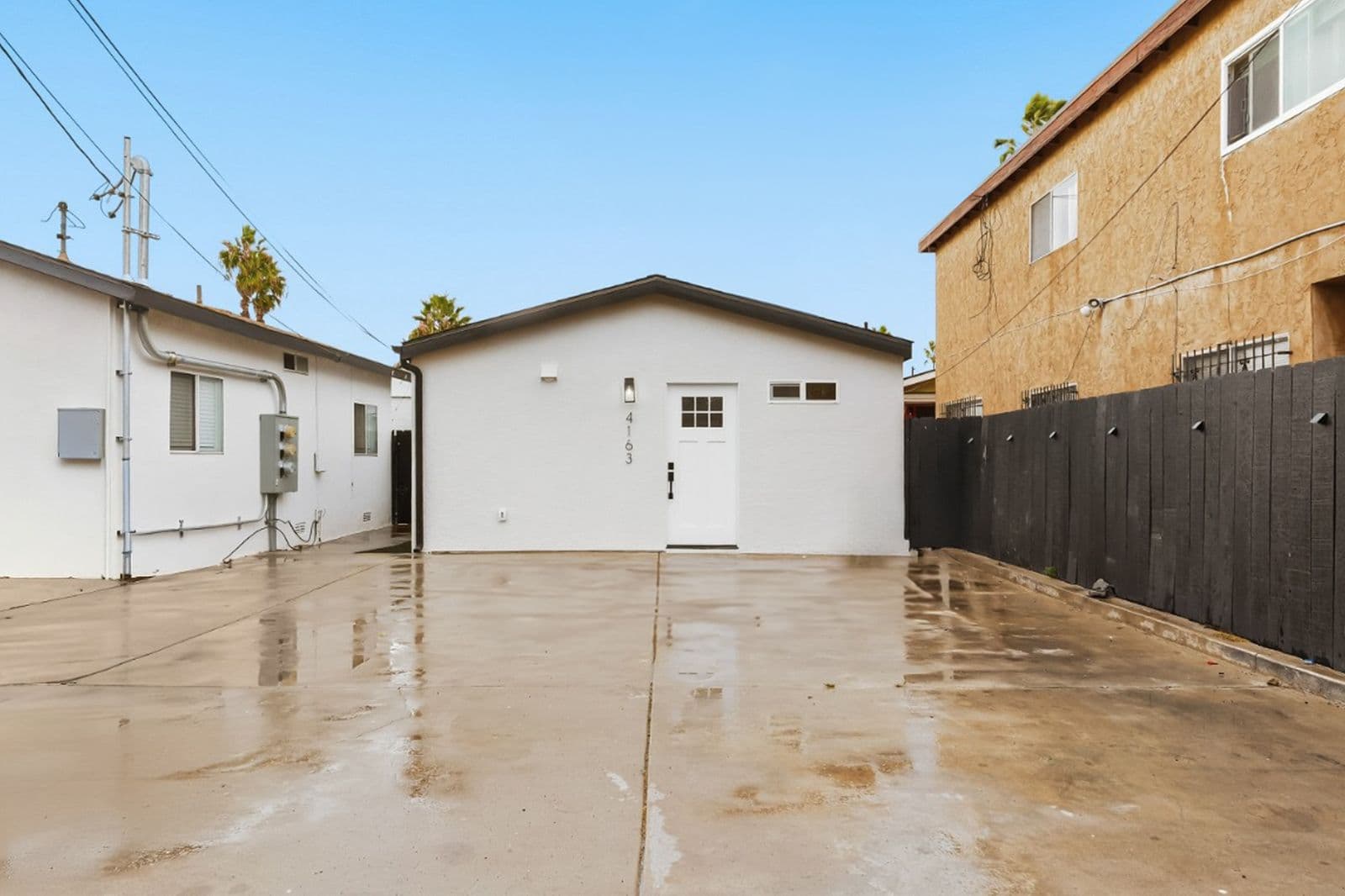
A fully separate structure in the rear or side yard. This is the most common ADU type in San Diego and typically provides the most flexibility in terms of layout and use.
Attached ADU
An addition to the existing home that shares at least one wall. Works well on lots where the rear yard is limited but the house footprint allows for expansion.
Junior ADU (JADU)
Created within the footprint of the existing structure - often a garage interior, a bedroom, or a defined interior space with its own exterior entry. A JADU is limited to 500 square feet and must be created within the existing structure. A full ADU can be up to 1,200 square feet and can be a separate detached structure. One property can have both.
A single property can typically support one full ADU plus one JADU, giving you two additional units beyond the main house under current California law.
Setback Rules: Where on Your Lot Can You Actually Build?
Setbacks determine where on your property an ADU can be placed. State law sets the baseline, and local ordinances can be more permissive but not more restrictive.
| Setback Location | Minimum Distance (State Baseline) |
|---|---|
| Rear property line | 4 feet |
| Side property lines | 4 feet |
| Front setback | Matches zoning district standard for main dwelling (typically 10 to 20 feet) |
| Existing converted structure | No new setback required - existing location is grandfathered |
In practice, the minimum distances are only part of the picture. A few things complicate placement on specific lots.
Setback numbers can vary from city to city within San Diego County, even under state minimums. If you're unsure what applies to your specific lot, it's worth a quick call to your local planning department, or you can reach out to BluPlan directly, and we'll help you sort out the exact regulations for your property and situation.
Lot Shape
Standard rectangular lots are straightforward. Flag lots, pie-shaped lots, and lots with angled rear property lines require careful plotting to determine exactly where the four-foot envelope lands.
Easements
Utility, drainage, and access easements often run along the rear or sides of a lot. These areas cannot have structures built on them even if they fall within the normal setback distance. Your title report or county parcel records will show any easements on your property.
Existing Structures - Including Garages
If a detached garage already sits closer than four feet to the property line, converting it to an ADU is often the cleanest option on a tight lot. California law allows existing structures to be converted without meeting the new four-foot setback requirement. The existing location is grandfathered. This is one of the main reasons garage conversions are popular on constrained San Diego lots.
Ready to start your project?
Schedule a free consultation with our team to discuss your project. We'll tell you what's needed and give you a clear quote, no obligation.
What Can Complicate a Project - and What Can't Stop It
Most San Diego properties don't have anything that disqualifies an ADU project. A few situations are worth knowing about before you start.
HOAs: California law significantly limits what HOAs can do. An HOA cannot outright prohibit an ADU. They can regulate aesthetics (materials, colors, rooflines) to maintain neighborhood standards, but they cannot block the project itself. If you're in an HOA, expect a parallel review process alongside the city permit process.
Historic districts: Properties in designated historic districts face additional design review. The ADU can still be approved, but the exterior design must meet historic preservation standards.
High Fire Hazard Severity Zones: San Diego County has significant HFHSZ areas, particularly in the eastern and northern parts of the county. ADUs in these zones require fire-resistant construction: ember-resistant vents, ignition-resistant materials, and established defensible space. This adds to project scope but does not prevent the project.
Very small or constrained lots: On rare occasions, the combination of setbacks, minimum ADU size, and existing structures leaves no buildable area. This is the exception, not the rule, and a site review will surface it quickly.
City vs. County: Which Permit Office Is Yours?
San Diego County contains many incorporated cities, each with their own permit office, as well as unincorporated communities that fall under County jurisdiction. Knowing which one covers your property determines where you apply and which specific ADU ordinance applies.
| Location | Permit Authority | Portal |
|---|---|---|
| City of San Diego | Development Services Dept (DSD) | Accela Citizen Access |
| Chula Vista | City of Chula Vista Development Services | CSS Portal |
| El Cajon | City of El Cajon Building Division | In-person / online |
| National City | City of National City Building Division | In-person |
| Escondido | City of Escondido Building Division | Online portal |
| Unincorporated areas | SD County Planning & Development Services | Accela Citizen Access (County) |
La Jolla, for example, falls within City of San Diego jurisdiction despite having its own identity and zip code. If you're unsure which agency covers your address, the County's PDS property lookup tool can confirm jurisdiction by address in under a minute.
Your property's APN (Assessor's Parcel Number) will confirm your jurisdiction. Most local planning departments have online zoning lookup tools where you can verify your designation without calling anyone.
Encinitas, located in the North County coastal area of San Diego County, has its own municipal jurisdiction and has historically been one of the more ADU-friendly cities in the region. If your property is near the county line, confirm which jurisdiction you're in before moving forward - it affects where you apply and what rules govern your project.
Frequently Asked Questions
Can I build an ADU in San Diego if I don't live on the property?
Yes. California eliminated the owner-occupancy requirement for ADU construction and rental. You do not need to live on the property to build an ADU or rent it out.
What's the difference between an ADU and a JADU?
A JADU is limited to 500 square feet and must be created within the existing structure. A full ADU can be up to 1,200 square feet and can be a separate detached structure. A JADU shares a wall with the main house. One property can have both.
Can my HOA block me from building an ADU in San Diego?
No. California law prevents HOAs from prohibiting ADUs outright. They can regulate design elements but cannot refuse to allow the project. Expect a parallel HOA review process, but the decision cannot be an outright denial.
Do I need a permit to build an ADU in San Diego?
Yes. All ADU construction in San Diego - city or county - requires a building permit. This includes detached ADUs, attached ADUs, JADUs, and garage-to-ADU conversions. The permit process requires a complete drawing set reviewed and approved before construction can begin.
What makes Encinitas ADU plans different from San Diego?
Encinitas has its own municipal code for ADUs, separate from the City of San Diego and San Diego County. State law minimums apply everywhere, but Encinitas has its own local standards for design and setbacks. If your property is in Encinitas, your permit application goes to the City of Encinitas Development Services Department.
Ready to Find Out What You Can Build?
Confirming eligibility is step one. What matters most after that is understanding what you can actually build on your specific lot - which depends on dimensions, existing structures, setback geometry, and your project goals.
BluPlan Studio's ADU design services start with a review of your property before any design work begins. Our work with homeowners across San Diego, La Jolla, Chula Vista, Escondido, National City, and El Cajon, and can quickly identify any site-specific constraints worth planning around. Visit our service areas page for more detail on how they work throughout the county.
Schedule a free consultation to talk through your property and what's buildable on it.
See This Design in Action
Explore our portfolio projects that bring these concepts to life.